Select T-Shirts Clearance - Now 50% Off
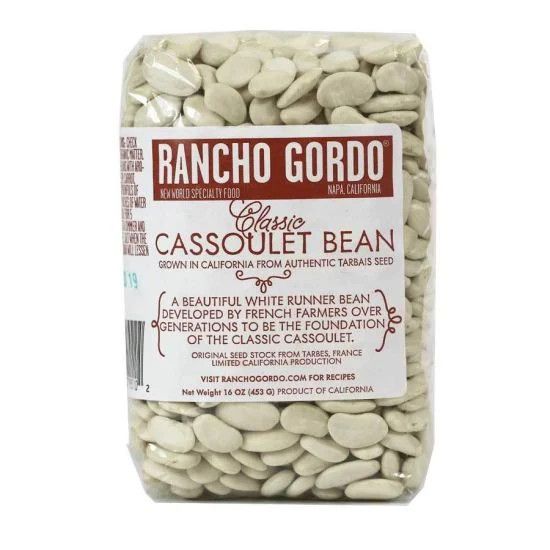
Rancho Gordo - Cassoulet Beans
$11.00
In stock: 9 available
Product Details
UPC: 713757955102
Brand: Rancho Gordo
Is it marketing or is it history? Some would argue that a cassoulet isn't a cassoulet without Tarbais beans. There are many more interesting arguments to be had, but we think once you taste these, you'll agree that it's a great bean. Large, white and super-creamy, Rancho Gordo's Cassoulet Bean is ideally suited to the slow-cooked goodness of a cassoulet. All the various meats and seasonings mingle with the mild but sturdy beans and with a little effort, you have one of the classic dishes of southwest France.
Rather than suffer French prices, which can run up to $30 a pound when out of season, Rancho Gordo took seed from France and produced this bean with the distinct terroir in California. Tarbais beans were developed by generations of farmers in Tarbes, France. The original seed is a New World bean and most likely originated in Mexico. Out of respect for the French farmers and terroir, wRancho Gordo decided to call the bean Cassoulet Bean. They think in order to call it Tarbais, it should be grown in southwestern France.
You can follow the classic rules for cassoulet or you can experiment and be creative. A casserole of Cassoulet Beans with odds and ends from your refrigerator and larder, topped with good bread crumbs and dotted with butter before a trip to the oven would be a welcome dish on a winter's table.
To cook these beans as they would in France, simmer with carrot, onion, garlic, peppercorns, and a bouquet garni (bay leaves, celery leaves, fresh parsley, and/or fresh thyme tied with string or placed in a cheesecloth bag). For an extra-rich broth, throw in a thick slice of pancetta or a ham hock.
Ingredients: tarbais beans
Save this product for later
Rancho Gordo - Cassoulet Beans
Powered by Lightspeed
Display prices in:USD